
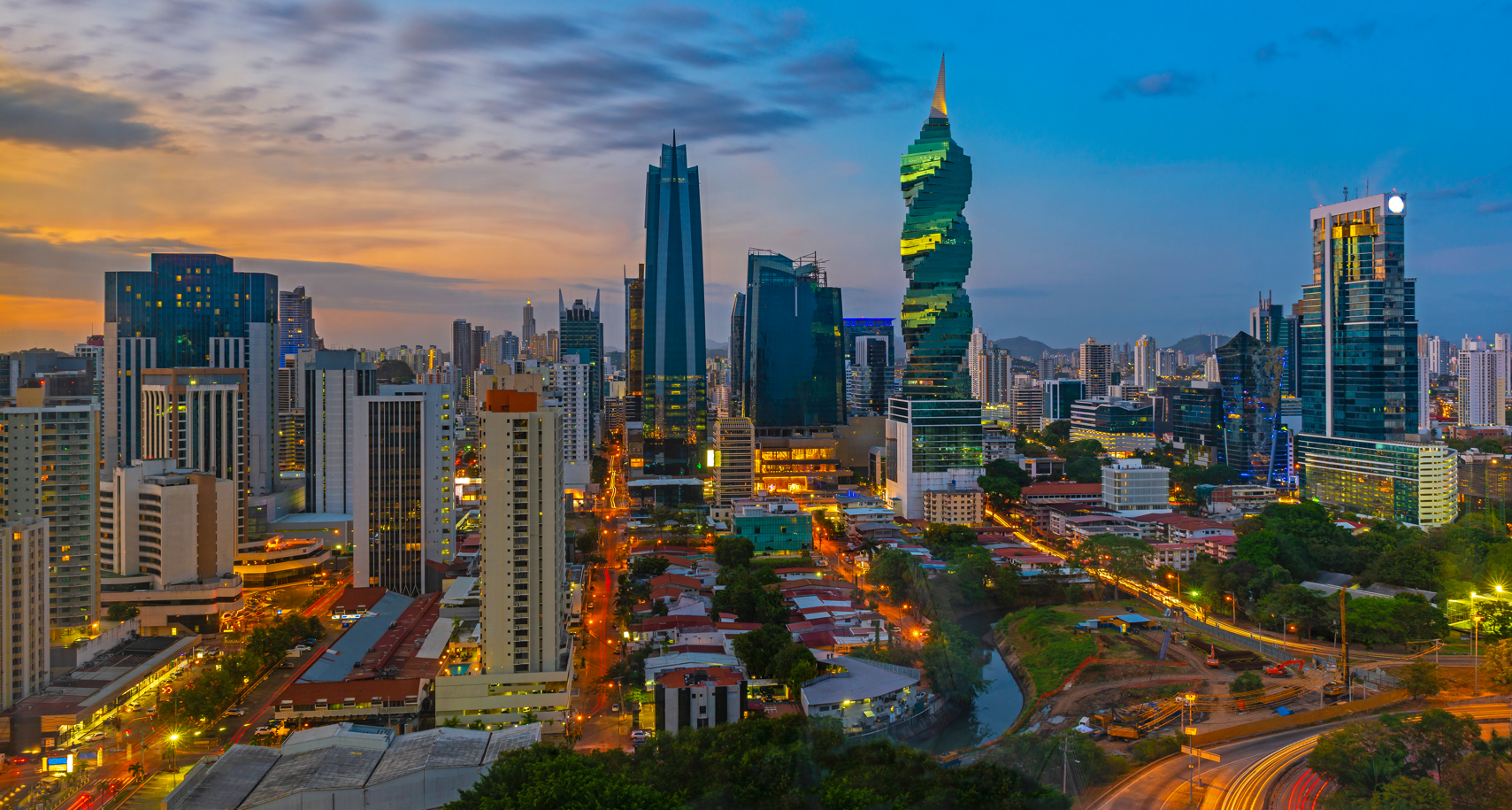
Culture and Geography
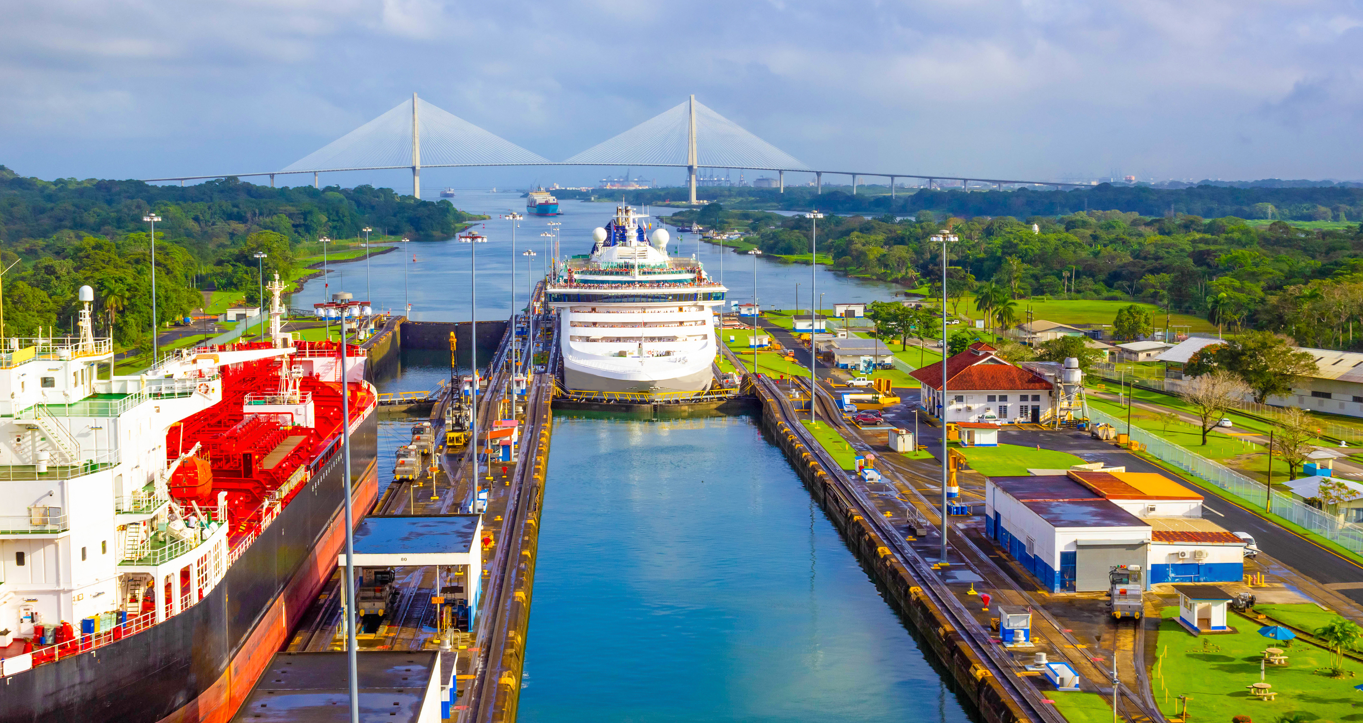
Panama is strategically located at the crossroads of North and South America, connecting the Atlantic and Pacific Oceans through the Panama Canal. Its geographic position has made the country an important international centre for trade, logistics, finance and business. The capital city, Panama City, is one of the leading financial centres in Latin America and is home to a well-developed professional and business-services sector. Panama has a stable, service-based economy supported by international trade, banking, logistics, tourism and the Panama Canal.
Spanish is the official language, while English is widely used in banking, legal and international business, particularly in Panama City. Panama operates on the GMT-5 time zone, providing convenient working-hour overlap with North America, Latin America and Europe.
Panama uses the US Dollar alongside the Panamanian Balboa, with the two currencies maintained at parity. The country has no traditional central bank and operates a fully dollarised monetary system. The Balboa exists mainly as coinage, while the US Dollar is the principal medium of exchange.
Legal Landscape
Panama offers a flexible legal framework for international business, corporate structuring, asset protection and succession planning.
The jurisdiction provides several established legal structures, including Panamanian corporations and Private Interest Foundations, which can be used independently or together depending on the client’s objectives.
- Companies: Panamanian corporations are governed principally by Law No. 32 of 1927. They provide a flexible corporate structure with limited liability for shareholders, There is generally no requirement to fully pay up authorised capital on incorporation. requirement, and flexibility regarding the nationality of directors and officers. Panamanian companies can be used for international business, investment and asset-holding purposes, subject to applicable legal and regulatory requirements.
- Private Interest Foundations: Private Interest Foundations are governed by Law No. 25 of 12 June 1995. They have separate legal personality and are commonly used for asset protection, wealth preservation and succession planning. A foundation’s assets are legally separate from the founder’s personal assets, while its governing framework allows considerable flexibility in defining beneficiaries and the administration and distribution of assets.
- Compliance: Panama participates in international transparency initiatives, including FATCA, CRS and beneficial ownership reporting, and entities may be subject to economic substance, accounting and compliance obligations
PANAMA ENTITIES AT A GLANCE
Foreign-Source Income Generally outside the Panamanian tax base
Taxation
Panama operates primarily under a territorial tax system, meaning that taxation is generally based on the source of income rather than simply on the residence or incorporation of the taxpayer.
- Territorial Tax Principle: Income arising from activities carried out in Panama is generally subject to Panamanian income tax, while foreign-source income is generally outside the scope of Panamanian income tax.
- Foreign-Source Income: Income generated from activities conducted outside Panama is generally not subject to Panamanian income tax, subject to applicable anti-avoidance rules and the specific facts of each case.
- No General Inheritance or Estate Tax: Panama does not impose a general inheritance or estate tax, which can make the jurisdiction relevant for international succession and wealth-planning structures.
- Private Interest Foundations: Assets and income relating to foreign activities may benefit from Panama’s territorial tax principles, depending on the nature and source of the income and the structure involved.
- International Compliance: Structures remain subject to applicable reporting, tax, anti-money-laundering and international information-exchange requirements.
Banking in Panama
Panama has one of the most established international banking centres in Latin America, with a strong presence of local and international financial institutions.
- International Banking Centre: Panama’s International Banking Centre comprises local and international institutions authorised to provide domestic and cross-border banking services, and remains one of the largest banking hubs in Latin America..
- US Dollar Environment: The widespread use of the US Dollar provides convenience for international transactions and reduces foreign-exchange exposure for structures operating in USD.
- Multi-Currency Banking: Banks offer accounts and services in USD and other major currencies, together with online banking and investment-related services, subject to individual bank requirements.
- Compliance Standards: Banks apply customer due-diligence, beneficial ownership and AML/CFT requirements in line with applicable Panamanian and international standards. The banking regulator continues to strengthen its supervisory and AML/CFT framework.
For more information
For further information, please email us on [email protected].